
Strength and conditioning built into clinically-led coaching
HP3 strength and conditioning is programmed by a strength and conditioning coach working inside the same team as the physiotherapists, coaches and nutritionists who already know your training. Every programme starts with an assessment, is written around your injury history and your real training week, and is delivered in TrainingPeaks with a demonstration video for every exercise.
Whether you want a strength plan coached and adjusted every month, a single session to sort out your lifting technique, or a proven plan you can start today, the standard is the same: load that is chosen from your numbers, progression that is planned rather than guessed, and strength work that makes the running, riding or swimming better instead of getting in its way.
Start with the free TrainingPeaks test week. It tells us where you are, and it tells you whether coached strength work is the right next step.
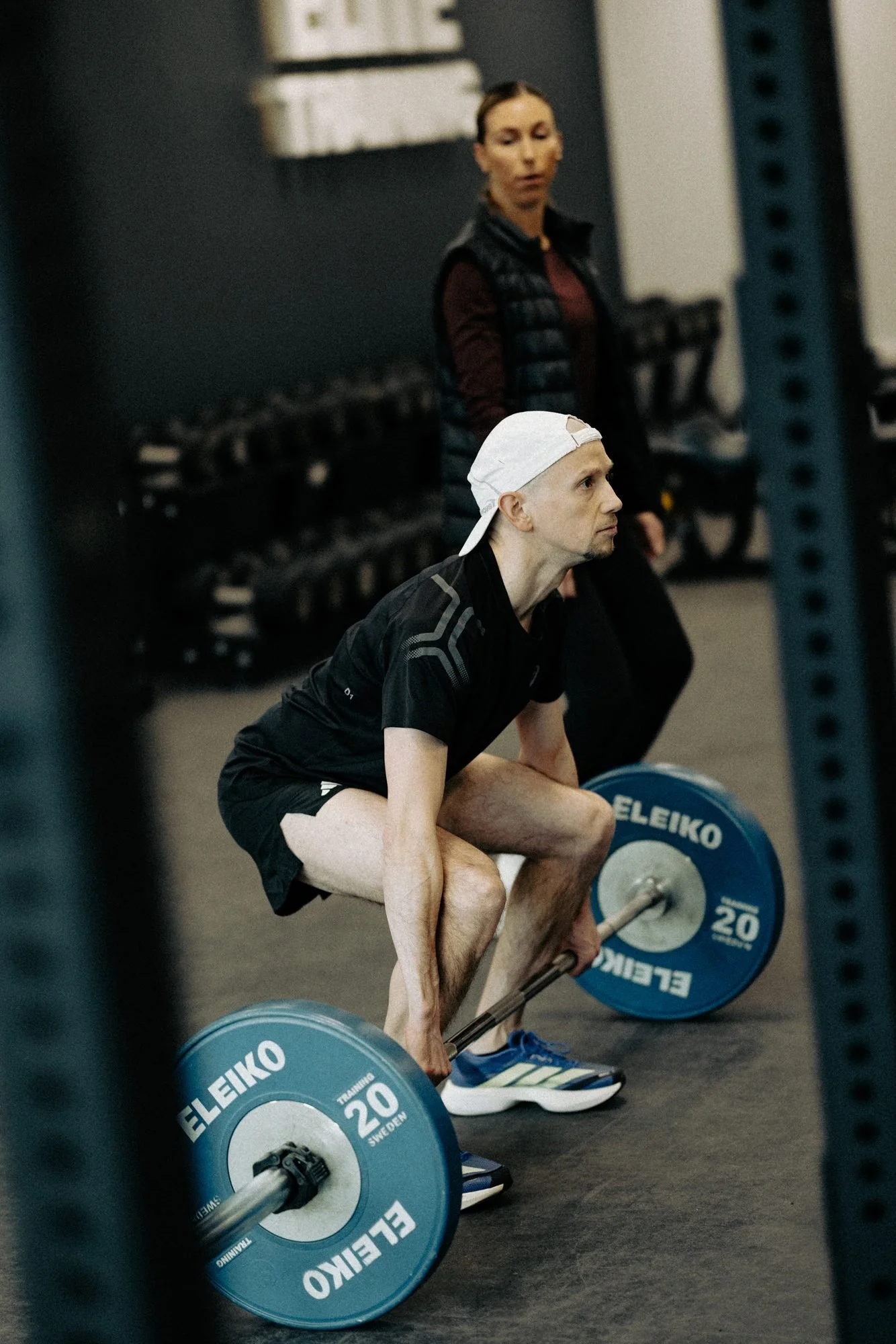
Strength is where speed and durability are built
Endurance athletes are told to do strength work, and most know they should. Far fewer are told what kind, how heavy, how often, or what to do about the knee that has been grumbling since March. That is the gap HP3 strength and conditioning fills: the evidence on what works, and a clinical team to make sure it works for you.
Heavy, specific, and planned
The strength training that improves running economy is not the high-rep, light-weight circuit most endurance athletes default to. In a 2024 meta-analysis of middle- and long-distance runners, high-load strength training and combined programmes improved running economy, plyometric training helped at easier speeds, and submaximal and isometric work did not (Llanos-Lagos et al., 2024). Heavy resistance training also had the larger effect on time-trial performance when compared directly with plyometrics (Eihara et al., 2022). Heavy means heavy for you, chosen from your own assessment, and that is what we programme.
Supervised work is what prevents injury
The honest reading of the injury evidence is less tidy than the marketing. A 2024 meta-analysis of nine trials in 1,904 endurance runners found that exercise-based prevention programmes, taken together, did not reduce running-related injury. Supervised programmes did; the unsupervised ones, where runners were handed a sheet and left to it, were where the effect disappeared, most likely because people stop doing them (Wu et al., 2024). Strength work protects you when it is done, progressed and checked. That is the case for coaching it rather than downloading it.
Programmed around your injury history
Most strength plans are written as if the athlete has never been hurt. At HP3 the programme starts with an assessment and your injury history, and the strength and conditioning coach works in the same team as the physiotherapists who treat endurance athletes every week. If a movement needs modifying, it is modified before you load it, not after it flares. If you are mid-rehab, the strength plan and the physiotherapy plan are one plan, written by people who talk to each other.
Not sure whether you need coached strength work, a plan to follow, or physiotherapy first? Email info@hp-3.co.uk and ask, and we will tell you plainly.
Test it, analyse it, programme it, coach it
Every HP3 strength and conditioning engagement follows the same four steps, in the same order, wherever you train. It starts with a test week that costs nothing. If you want to see the thinking behind the sessions first, watch our talk on strength work as a recovery tool after racing.
A free test week
Download the HP3 test week on TrainingPeaks (use the code Free at checkout) and complete the assessments at home or in the gym: a movement screen and a set of benchmark strength and capacity tests, each with a demonstration video. A free basic TrainingPeaks account is all you need.

Analysis
Your HP3 strength and conditioning coach reads your test results, your movement screen and your injury history together, and identifies what is limiting you: a strength deficit, a left-right imbalance, a capacity gap in the calves, a movement that needs fixing before it is loaded. Then the constraints: the kit you have, the days you can train, the races you are building towards.
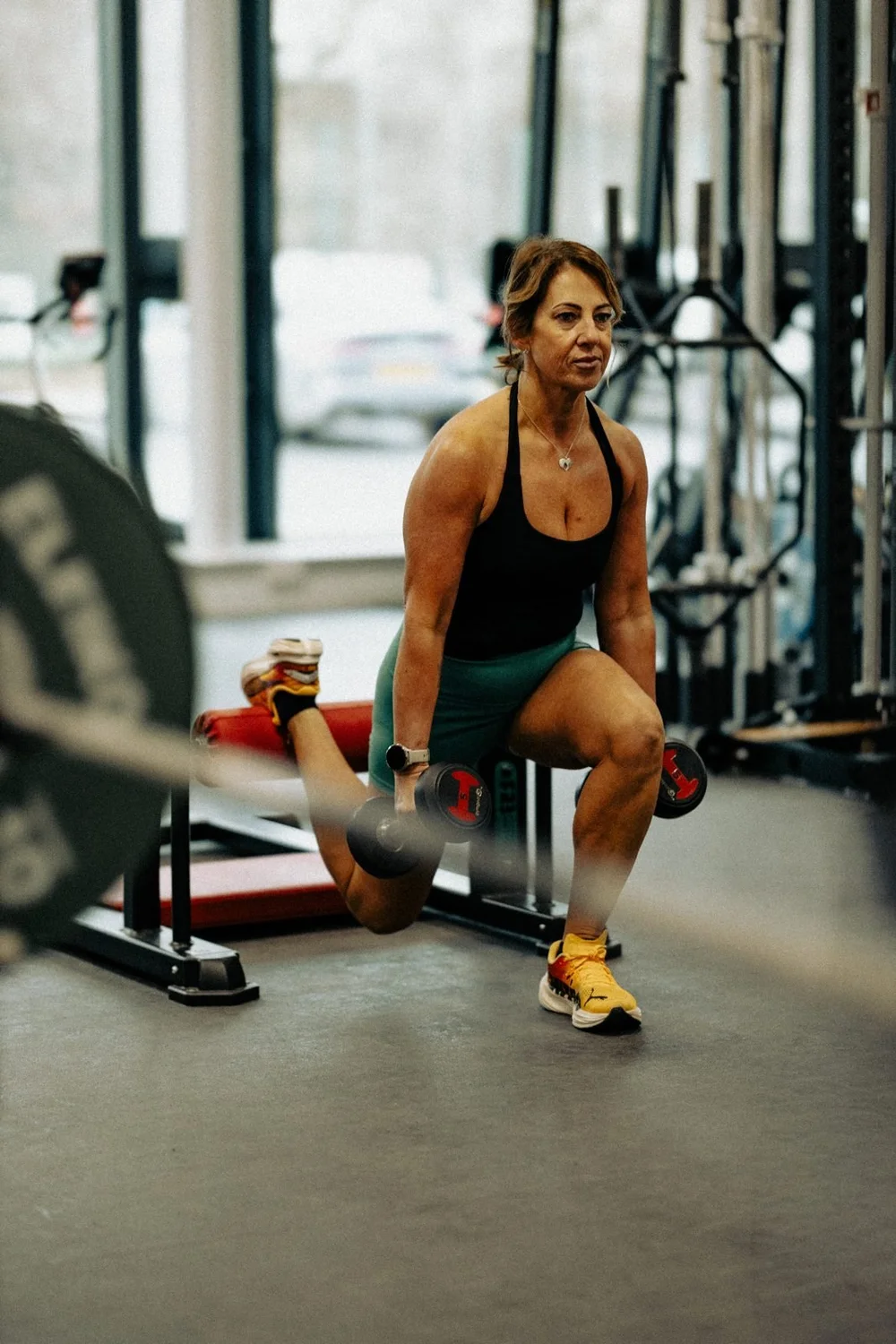
A programme in TrainingPeaks
Your plan is delivered in TrainingPeaks alongside your running, riding or swimming, so the strength sessions sit where they belong in the week rather than on top of the hardest day. Each session states the focus, the exercises, the sets, reps and load, and links a demonstration video for every exercise from the HP3 library.
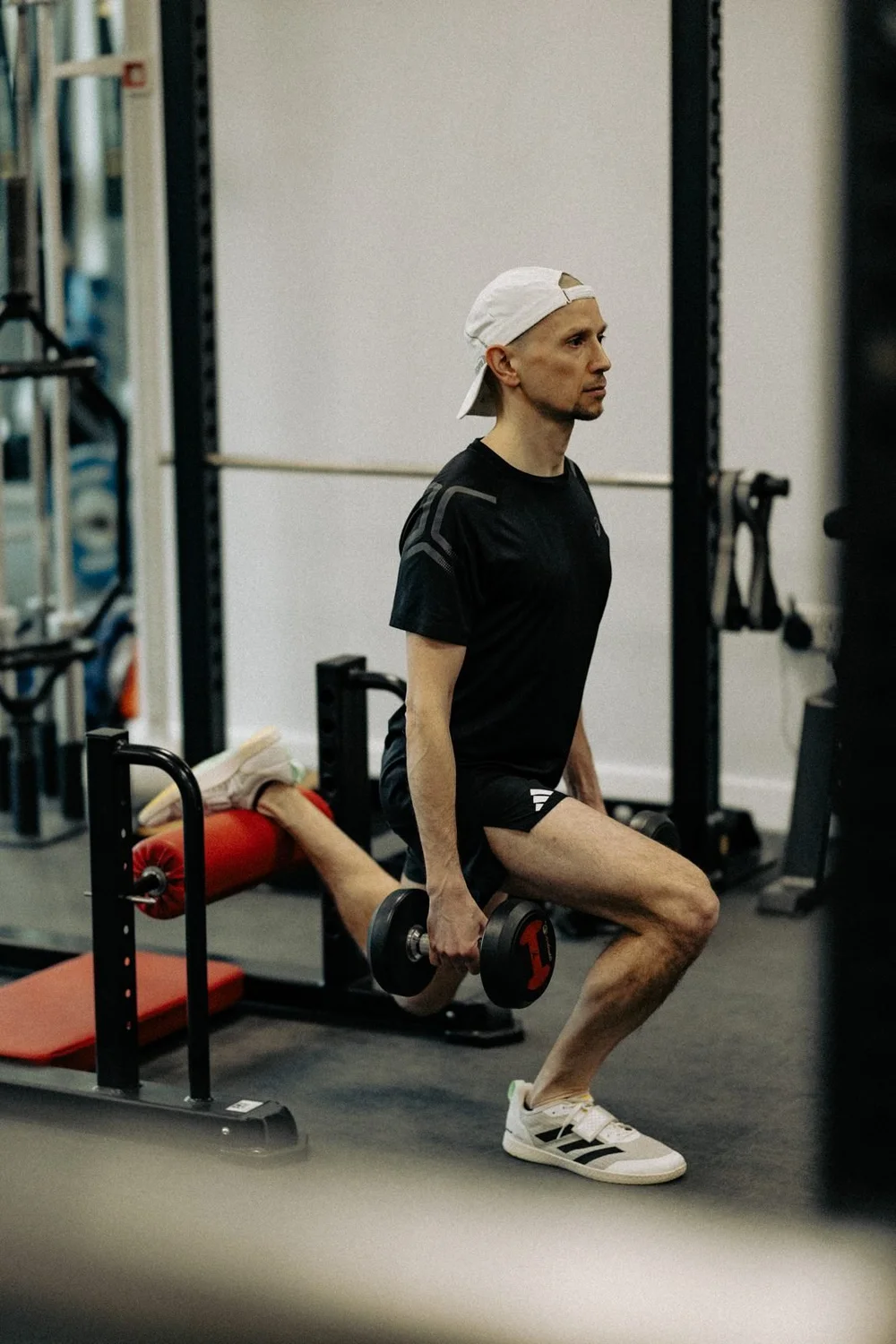
Coached, or self-directed
Monthly coaching means the programme is rewritten every month from the loads you log and the videos you send, with a check-in every week. Plan buyers follow the programme independently and can upgrade to coaching whenever they want the adjustments made for them. If you are coached by HP3, your strength coach, your endurance coach and, where needed, your physiotherapist work from the same calendar.

Reading your programme
- Block. Four to six weeks with one physiological aim. As you move from pre-season to in-season the focus of each block shifts.
- Focus. The adaptation each exercise is there to produce, so you know why it is in the session.
- Warm-up. Pre-activation, mobility and potentiation work that prepares the muscle groups the session will load.
- Sets, reps and load. How many times you repeat the exercise, how many repetitions in each set, and the weight you lifted, logged each week.
- Supersets (2A, 2B). Exercises performed straight after each other without rest.
- Notes. Coaching cues, variations, equipment and positioning for the exercise.
Getting the most out of it
- Follow the programme as written. It has been built around your training load, your progression and your recovery, so adding your own exercises changes the sums.
- Log the load every session. It drives the progression, and it is how your coach reads your capability and monitors performance.
- Film the lifts you are unsure of. Coached athletes upload them to a private channel and get technique feedback.
- Ask. The private channel is for questions, feedback and any concern about an exercise, however small.
- Use the demonstration videos. Every exercise in the programme is in the HP3 strength and conditioning library.
A free basic TrainingPeaks account, which syncs to Garmin, Wahoo, COROS and Apple Watch. For home programmes, a few resistance bands and a pair of dumbbells or a kettlebell. For gym programmes, a barbell, a rack and a bench. If you have none of it, say so: the programme is written for the kit you have, not the kit we would like you to have.
If you are injured or in pain now, start with physiotherapy at HP3 rather than a strength plan. The two are written by the same team, and the strength work will be built into your rehabilitation from the first session.
Three ways to train with us
Coached every month, coached for a session, or a proven plan you follow yourself. All three are written by HP3’s strength and conditioning coach, delivered in TrainingPeaks, and backed by the demonstration library. Start with the free test week whichever route you take.
Monthly strength coaching
A personalised programme, rewritten every month from your data, with a weekly check-in. For athletes coached by HP3 and for athletes coached elsewhere or self-coached.
- Free test weekMovement screen and benchmark tests in TrainingPeaks. Use the code Free.Free
- Monthly coachingAssessment, individual programme built around your goals, training schedule, equipment and injury history; monthly progression; weekly check-in; technique feedback on the videos you send; rolling month to month.£60 a month
One-to-one technique session
An hour in the gym with HP3’s strength and conditioning coach to sort out how you lift: the deadlift that loads your back instead of your hips, the squat depth, the single-leg work that wobbles.
- Technique coaching sessionOne hour, in person. Review of your lifts, corrections, regressions and progressions, and what to practise.£60
- Before you buy a planIf you want your movement checked before you load it, book the same session first.£60
Strength training plans
Ready-made, research-based plans on TrainingPeaks you can start today. Home plans that need almost no kit, periodised gym plans, and race-specific bolt-ons.
- Plyometric Foundations6 weeks, home, all levels$4.99
- Ultra Strength and Plyometrics12 weeks, home$10.00
- Copenhagen Adductor Protocol6 weeks, all levels$10.00
- Core Stability8 weeks, home$20.00
- Trail Strength and Conditioning16 weeks, gym, intermediate to advanced$39.99
- Marathon Strength and Conditioning12 weeks, gym, intermediate to advanced$39.99
- Spine Race strength bolt-ons18 weeks, home or gym versions$14.95
Plan prices are set on TrainingPeaks in US dollars and include a free basic TrainingPeaks account; plans are covered by the TrainingPeaks refund policy. Coaching fees are per athlete and confirmed with you before anything starts. Not sure which route fits? Help me choose, or email info@hp-3.co.uk.
Your strength and conditioning coach
HP3 strength and conditioning is led by a strength and conditioning coach who programmes for athletes across many sports every working day, and who sits inside a team of physiotherapists, endurance coaches, nutritionists, a sport psychologist and a sleep coach. The combination is deliberate: the person writing your programme understands what the lifting is for, and has colleagues to ask when your history says a movement needs care.

Morgan Ogle
Strength and conditioning coach MSc Strength and Conditioning, Loughborough University. BSc Sport and Exercise Science. Lead Strength and Conditioning Coach, Burnley College.Morgan leads strength and conditioning at Burnley College, programming for athletes of many sports, abilities and training ages, and that breadth is the point: it has given her a thorough understanding of the physiological demands behind endurance performance and of how to build a programme that meets the demands of a specific discipline while reducing the risk of injury. She grew up in Australia playing nearly every sport available, played touch rugby at international level, and now trains for half-marathon and marathon events herself. Having been an elite athlete she knows the barriers that stop strength work being a priority, which is why her programmes are built athlete first: solutions that fit strength training into a schedule that is already full. Most of the demonstrations in the HP3 library are hers, and her ready-made plans are listed on TrainingPeaks.
We programme from your assessment, not from a template, and we load what the evidence says matters: heavy, specific, progressed, and placed in the week where it does not wreck the key endurance session. We will tell you when an exercise you have seen online is not worth your time, and when the limiter is not strength at all.
Strength work at HP3 is written by people who also treat endurance athletes. If something hurts, you will not be told to push through it; you will be assessed, and the programme will change. If what you need is physiotherapy, nutrition or a conversation about your training load, we say so and connect you to the right person in the team.
The research behind the programming, and where to hear our strength and conditioning coach explain her thinking.
- Which strength training improves running economy. Llanos-Lagos C, Ramirez-Campillo R, Moran J, Sáez de Villarreal E. Effect of strength training programs in middle- and long-distance runners’ economy at different running speeds: a systematic review with meta-analysis. Sports Med 2024;54(4):895-932. doi:10.1007/s40279-023-01978-y
- Heavy lifting versus plyometrics. Eihara Y, Takao K, Sugiyama T, et al. Heavy resistance training versus plyometric training for improving running economy and running time trial performance: a systematic review and meta-analysis. Sports Med Open 2022;8:138. doi:10.1186/s40798-022-00511-1
- Why supervision matters for injury prevention. Wu H, Brooke-Wavell K, Fong DTP, Paquette MR, Blagrove RC. Do exercise-based prevention programs reduce injury in endurance runners? A systematic review and meta-analysis. Sports Med 2024;54(5):1249-1267. doi:10.1007/s40279-024-01993-7
- Low energy availability in cyclists. Morgan Ogle on the short- and long-term cardiovascular effects of under-fuelling, for The Cycling Physios. Watch on YouTube
- The demonstrations. Morgan’s YouTube channel, where most of the HP3 library exercises are filmed. @morganogleperformance
Learn from us
HP3 publishes what it teaches. Watch the team explain why strength work belongs in an endurance programme, use the library and the calculators we built for our own athletes, and read the papers the programming is based on. If you then want the plan written for you and your races, that is what the coaching is for.
Watch
Use
- The HP3 strength and conditioning libraryDemonstrations of every exercise we programme, in 15 categories
- Selecting the right load for strength trainingHow to pick a weight that is heavy enough, with or without a known one-rep max
- The strength training calculatorEstimate your one-rep max from a submaximal test
- Strength and conditioning infographicsRace-specific preparation and general health
- Recovering from strength sessionsPhase by phase, from the HP3 recovery protocols
- Strength and posture exercise snacksA quick activation for hips, core and shoulders after desk work
The research
- Which strength training improves running economyLlanos-Lagos et al., Sports Medicine, 2024
- Heavy resistance training versus plyometrics for runnersEihara et al., Sports Medicine Open, 2022
- Do exercise programmes reduce injury in runners? Only when supervisedWu et al., Sports Medicine, 2024
- The strength plan catalogueHome, gym and race-specific plans on TrainingPeaks
- Help me choose a planThree questions, read and answered by an HP3 coach
Frequently asked questions
Do I need to be coached by HP3 to use strength and conditioning coaching?
No. Monthly strength coaching, technique sessions and the training plans are open to anyone: coached elsewhere, self-coached or not following a plan at all. If you are coached by HP3, your strength coach and your endurance coach work from the same TrainingPeaks calendar, so the strength sessions are placed around your key sessions rather than on top of them.
Do I need a gym?
No. The home plans need a few resistance bands and a dumbbell or kettlebell, and the plyometric plans need no kit at all. The periodised gym plans and most monthly coaching programmes assume access to a barbell, a rack and a bench. Tell us what you have and the programme is written for it.
What is in the free test week?
A one-week TrainingPeaks plan containing a movement screen and a set of benchmark strength and capacity tests, each with a demonstration video, that you complete at home or in the gym. Download it from TrainingPeaks with the code Free. The results are the starting point for an individual programme, and they tell you plainly where you are.
What does it cost?
The test week is free. Monthly strength coaching is £60 a month, rolling. A one-hour in-person technique session is £60. Ready-made plans on TrainingPeaks range from $4.99 for the six-week plyometric foundations plan to $39.99 for a 16-week periodised gym plan; the full list is in plans, sessions and fees.
How is the programme delivered?
In TrainingPeaks, next to your running, riding or swimming. Each session lists the focus, the exercises, the sets, reps and load, and links a demonstration video for every exercise. You log the loads you lift in the app; for coached athletes, those loads and the videos you send are what the next month is written from.
How much time does it take each week?
It depends on the plan and the phase. The home plans on TrainingPeaks take roughly 40 minutes to an hour and a half a week; the periodised gym plans about two hours a week across two sessions. Monthly coaching is written to the time you actually have, which is one of the first things we ask.
I am injured or in pain now. Can I start?
Start with physiotherapy rather than a strength plan. Pain changes what should be loaded and how, and loading through it is how a niggle becomes a season out. HP3’s physiotherapists and strength coach are one team, so once you have been assessed the strength work is written into your rehabilitation from the first session. See physiotherapy at HP3.
Is coaching online or in person?
Monthly coaching is delivered online through TrainingPeaks, with technique feedback on the videos you upload, so it works wherever you train. Technique sessions are one hour, in person, with our strength and conditioning coach. Email info@hp-3.co.uk to arrange one.
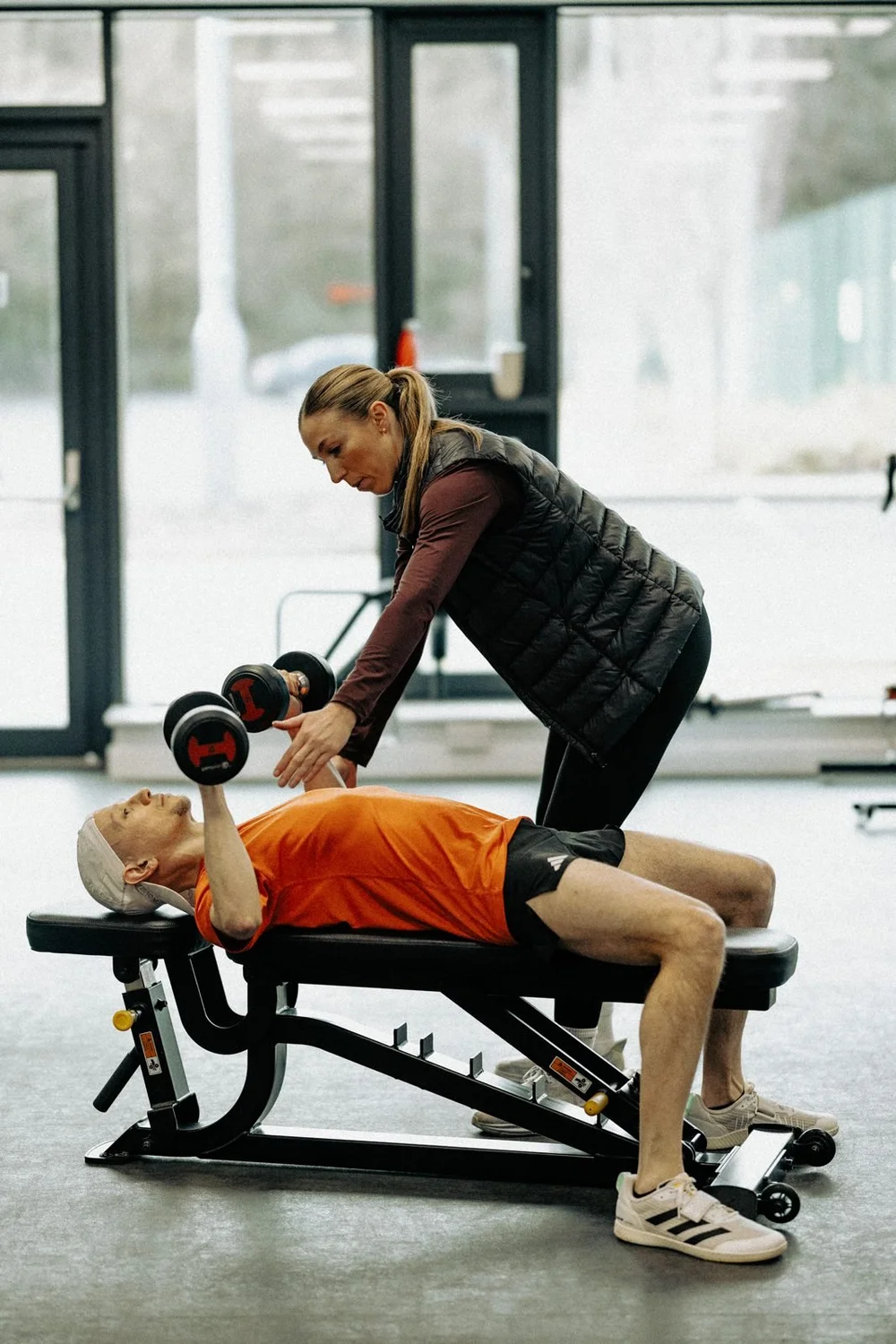


Start with the free test week
It costs nothing, it takes a week, and it gives you and us the same honest picture: where your strength is, where it is not, and what should be loaded first. Send us the results, or just the question, and you will get a plain answer on whether coached strength work is the right next step.
If what you need is coaching, nutrition or physiotherapy rather than strength work, start with coaching with HP3, sports nutrition or physiotherapy at HP3. If you would rather get to know the team first, join the TeamHP3 community.
Not sure which route you need? Email info@hp-3.co.uk and ask.
Four steps, in this order. The full list of plans, sessions and fees is in plans, sessions and fees.
- Free test weekDownload on TrainingPeaks with the code Free; complete at home or in the gym.Free
- Analysis and a reply from our strength coachWhat the tests say, and which route fits.By email
- Your programme in TrainingPeaksIndividual, built around your injury history and your training week.£60 a month
- Coached month by monthWeekly check-in, monthly progression, technique feedback on your videos.Rolling