
The research behind clinically-led coaching
HP3 athletes are coached and treated by people who publish. The team hold university posts across multiple institutions, and its peer-reviewed work covers physiotherapy and clinical screening, sport psychology, cycling science, sports nutrition and sleep. This page lists that work, with a link to every paper.
Reading research is one thing. Producing it is another: ethics approval, peer review, and being held to the standard of your own data. That standard runs through the coaching, the physiotherapy and the education at HP3, which is why we cite the evidence for what we ask you to do, and say so when the evidence is thin.
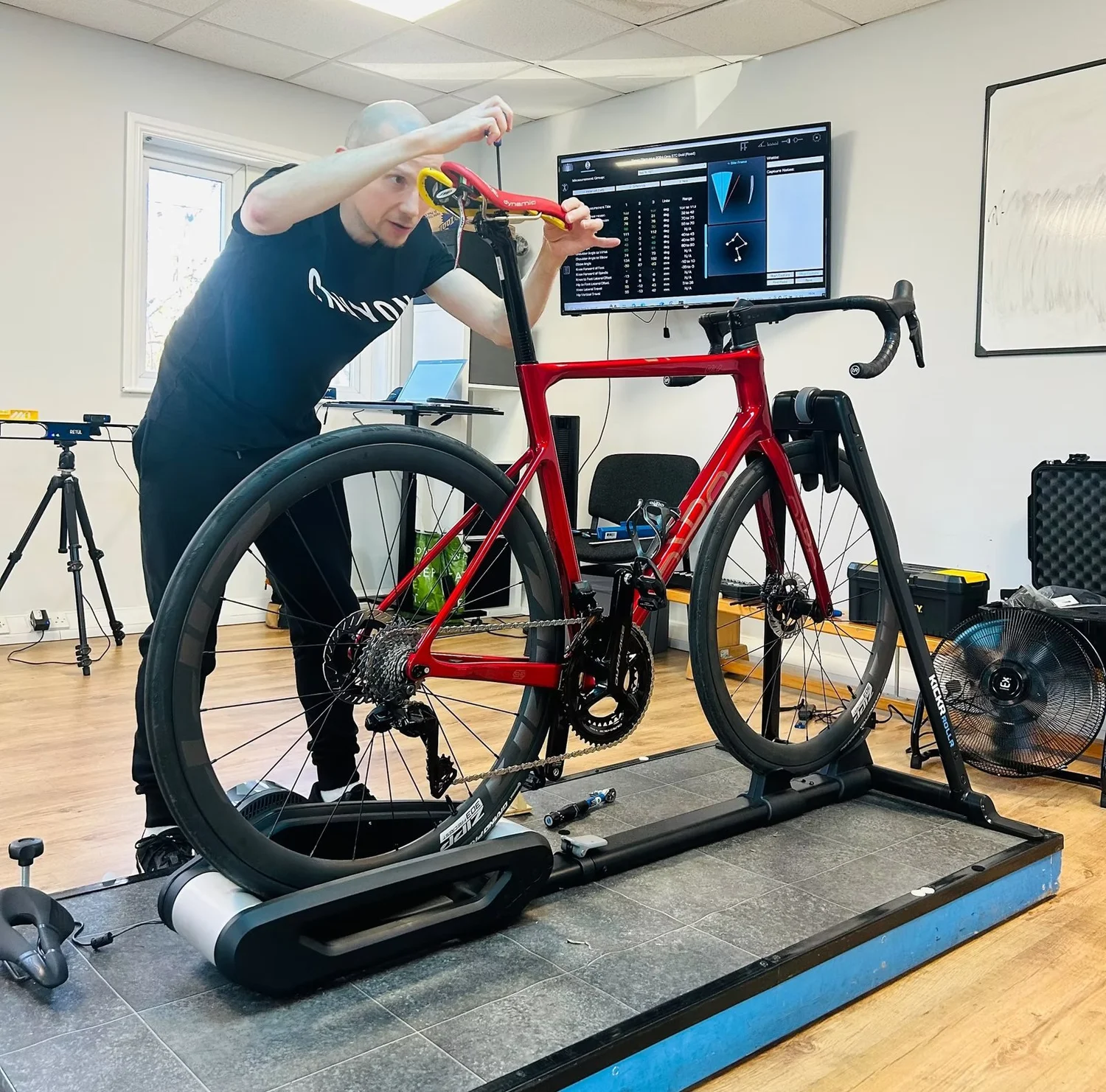
What published research means for your coaching
A publication list is not decoration. It tells you how the people writing your plan think, how they treat a claim they cannot support, and what they do when your data disagrees with the textbook.
Clinical rigour
Physiotherapy at HP3 is led by a registered clinician who also researches and teaches it. The screening questions you are asked, in the clinic and on this site, follow the standard set in our own published work on cauda equina screening: ask the right questions, and ask them the right way.
Evidence over fashion
A training method, supplement or recovery tool has to show its data before it reaches your plan. The team reads primary research as part of the day job, which is how we separate a well-marketed idea from a well-supported one. It is also why every claim on this site carries a citation, and why we say so when the evidence is thin.
Education and empowerment
Four of the five researchers below hold university teaching posts, and the fifth supervises research in sleep science. The coaching resources, calculators and infographics on this site are written to the same standard as their teaching: you should understand why you are doing something, not just what.
Five researchers, one coaching team
Each of them works with HP3 athletes directly: in the clinic, in a psychology consultation, in a nutrition review or a sleep assessment. Their research profiles are public. The links below go to the original records, not to our summary of them.
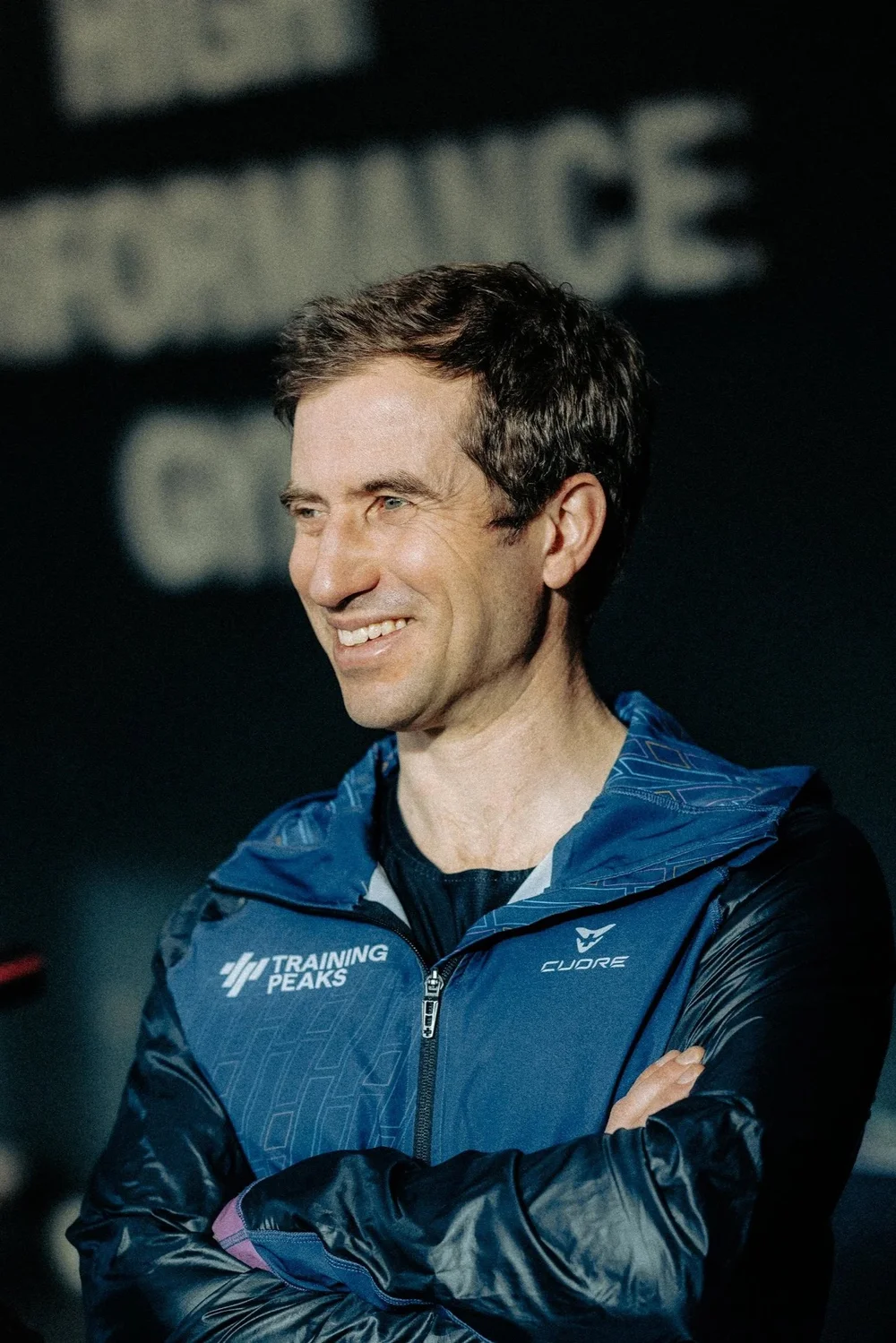
Tim Pigott
Founder, physiotherapist and head coach Chartered physiotherapist (HCPC, CSP). Lecturer in Physiotherapy, University of Salford.Tim’s research sits where physiotherapy meets performance: clinical screening for cauda equina syndrome, rehabilitation after surgery, how physiotherapists teach their patients, and the use of inertial sensors to measure movement in the field. He founded HP3 in 2007 and supervises MSc research projects at Salford.
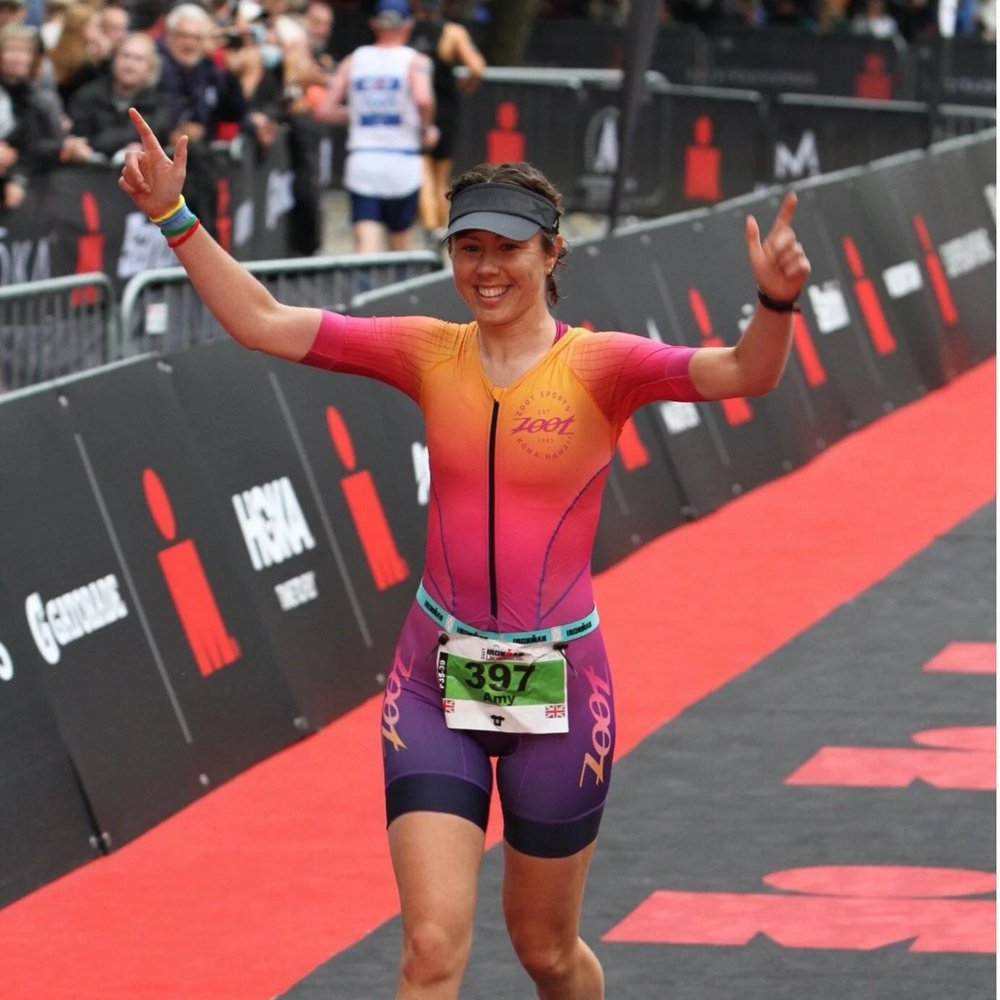
Professor Amy Whitehead
Sport and exercise psychologist HCPC-registered practitioner psychologist, BPS-accredited. Professor of Sport Psychology and Coaching, Liverpool John Moores University, where she leads the Sport Psychology, Education and Coaching Research Group.Amy’s research uses the Think Aloud method to study what athletes actually think during performance: cyclists in time trials, distance runners, golfers and cricketers, and more recently the coaches and practitioners who support them. Her work on stress and coping in professional women’s cycling and on pre-race nutrition behaviour at the Ironman World Championships is directly relevant to the athletes HP3 coaches.
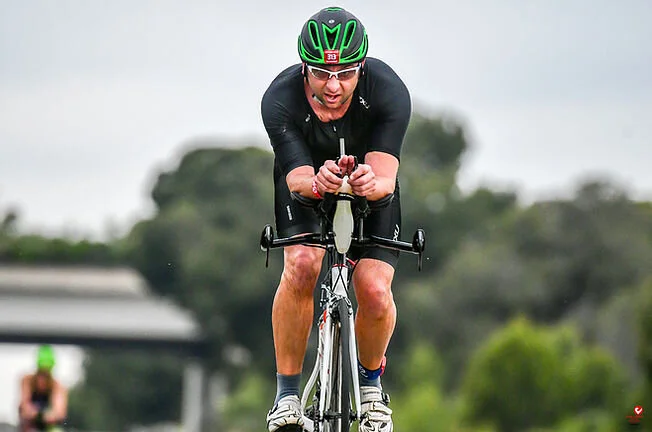
Dr Howard Hurst
Sports nutritionist and sport scientist PhD in Sport Science. Registered Nutritionist for Sport (RNutr, Association for Nutrition). Senior Lecturer in Sport and Exercise Science.Howard’s research is the physiology of cycling: power output and head accelerations in downhill and cross-country mountain biking, wheel size, what decides an off-road triathlon world championship, concussion in competitive cycling, and disordered eating among competitive cyclists. He has worked with professional road teams and national mountain bike squads.
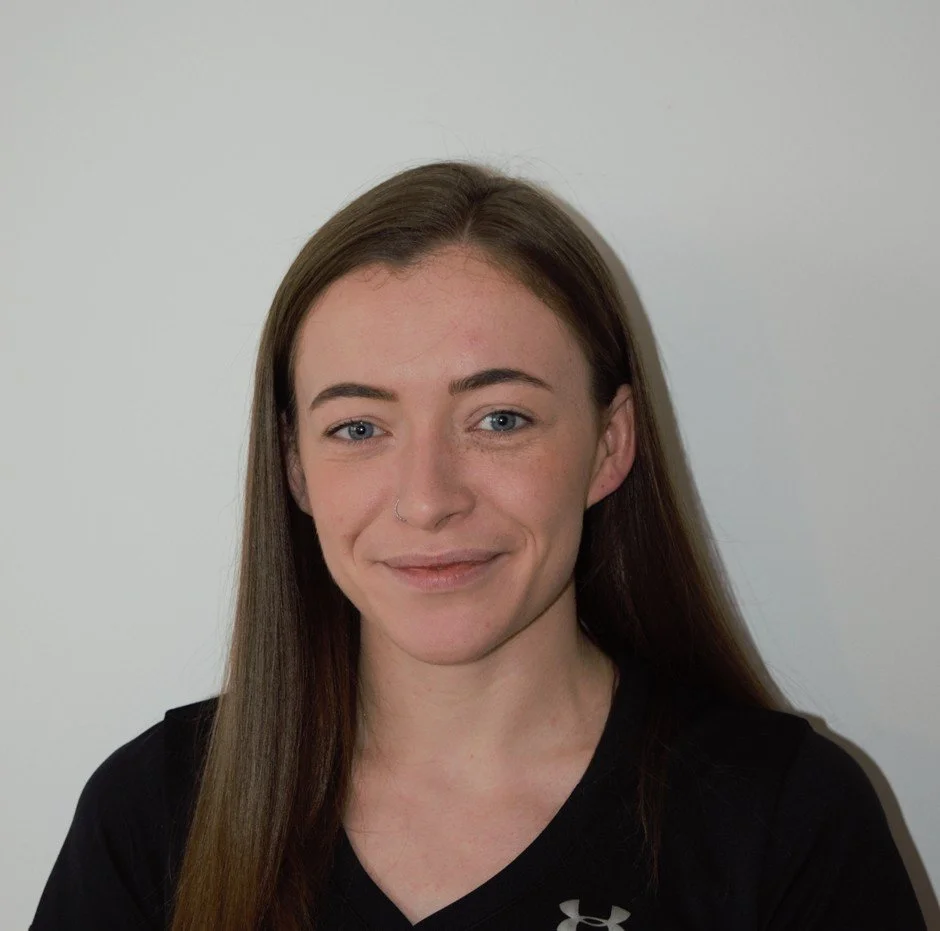
Dr Chloe Gallagher
Sleep coach and sports nutritionist PhD in sleep physiology and chronobiology, Liverpool John Moores University. Postdoctoral Research Fellow, Appleton Institute, CQUniversity.Chloe’s research measures what sleep loss does to performance and whether naps and nutrition can buy any of it back: partial sleep restriction and evening weightlifting, post-lunch naps, zinc and magnesium supplementation, and reviews of sleep and strength across the lifespan. It is the evidence base for HP3 sleep coaching.
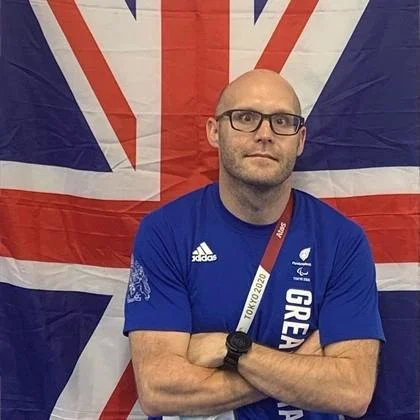
Ritchie Barber
Physiotherapist HCPC-registered physiotherapist. Clinical skills teacher on the physiotherapy degree programme, University of Salford. Paralympic silver medallist (Sydney 2000) and physiotherapist to British Para Swimming across two Paralympic cycles.Ritchie’s research is about measuring force properly: how rapid force production should be assessed and normalised in an isometric hamstring test on force plates, how portable force plates can be used to test the plantarflexors, and a framework for standardising the posterior shoulder endurance test, the test that matters for the shoulder of the overhead athlete, which is his clinical specialism.
Tim Pigott
Physiotherapist, head coach and Lecturer in Physiotherapy, University of Salford
Ten peer-reviewed outputs and two further contributions, 2014 to 2023, in physiotherapy, rehabilitation and sports technology. Two strands run through them: how physiotherapists screen and teach, from cauda equina screening to the use of adult learning theory in patient education, and how movement and rehabilitation can be measured outside the laboratory, from inertial sensors on horse riders to a multicentre trial of gamified rehabilitation after shoulder surgery.
Cauda equina screening in Physiotherapy: A qualitative study of physiotherapists in a community musculoskeletal service
Cauda Equina screening in physiotherapy: Are we asking the right questions and are we asking the questions right?
‘I am the educator and the learner at the same time’: a qualitative survey of the knowledge and use of adult learning theory in UK musculoskeletal physiotherapists' patient education
A multicenter randomized controlled trial comparing gamification with remote monitoring against standard rehabilitation for patients after arthroscopic shoulder surgery
A systematic review of the effectiveness of Pilates on pain, disability, physical function, and quality of life in older adults with chronic musculoskeletal conditions
A systematic review of the effectiveness of yoga on pain, physical function, and quality of life in older adults with chronic musculoskeletal conditions
Functional outcomes of paediatric medial patellofemoral ligament (MPFL) reconstruction surgery with or without patella distalisation and medialisation for recurrent patella instability
The evidence for using orthotics and/or exercises in the management of posterior tibialis tendon dysfunction
Investigation of the use of inertial sensing equipment for the measurement of hip flexion and pelvic rotation in horse riders
Observing the Observer: experiences with contextual inquiry to design a horse rider assessment interface
Bike fitting: an introduction for physiotherapists
A preliminary investigation of the use of inertial sensing technology for the measurement of hip rotation asymmetry in horse riders
Professor Amy Whitehead
Sport and exercise psychologist; Professor of Sport Psychology and Coaching, Liverpool John Moores University
Eight of around ninety publications, chosen for their relevance to endurance athletes. Amy’s method is Think Aloud: athletes verbalise their thoughts as they perform, so that pacing decisions, stress and coping can be studied as they happen rather than reconstructed afterwards. The selection runs from cognition in cycling time trials to self-regulation in excellent distance running, stress and coping in the professional women’s peloton, and pre-race nutrition behaviour at the Ironman World Championships.
From Intention to Execution: Pre-Race Nutrition Behaviours, Influences, and Performance Outcomes in Female Endurance Athletes at the IRONMAN World Championships
Tales from the peloton: Stress and coping in professional women's road cycling
Self-regulatory processes in goal striving during excellent distance-running performances: A qualitative study
Think aloud research in sport and exercise psychology: A focused mapping review and synthesis.
The Effect of Think Aloud on Performance and Brain Oxygenation During Cycling – An Exploratory Study
Motivational differences between 5K, half marathon and full marathon participants in the UK and India
An investigation of expertise in cycling: Eye tracking, Think Aloud and the influence of a competitor
Investigating the relationship between cognitions, pacing strategies and performance in 16.1 km cycling time trials using a think aloud protocol
Dr Howard Hurst
Sports nutritionist and sport scientist; Senior Lecturer
Eight of more than seventy publications, chosen for cyclists and triathletes. Howard’s research measures the real demands of riding: the power output and head accelerations of downhill mountain biking, what wheel size does to cross-country performance and muscle activity, which discipline decides an off-road triathlon world championship, and, more recently, concussion and disordered eating in competitive cycling.
“Getting Back on the Bike”: Risk, Injury, and Sport-Related Concussion in Competitive Road Cycling
An appetite to win: Disordered eating behaviours amongst competitive cyclists
Eating Disorders and Disordered Eating in Competitive Cycling: A Scoping Review
The magnitude of translational and rotational head accelerations experienced by riders during downhill mountain biking
The influence of swim, cycle and run performance on overall race outcome at the off-road triathlon world championships
The effect of mountain bike wheel size on cross-country performance
Influence of wheel size on muscle activity and tri-axial accelerations during cross-country mountain biking
Power output of field-based downhill mountain biking
Dr Chloe Gallagher
Sleep coach and sports nutritionist; Postdoctoral Research Fellow, Appleton Institute, CQUniversity
Eight of fourteen publications, all on sleep and performance. Chloe’s doctoral work at Liverpool John Moores restricted trained athletes to four hours of sleep for two nights and measured what happened to evening strength, cognition and mood, then tested whether a post-lunch nap or a zinc and magnesium supplement could recover any of it. The reviews place that work in the wider evidence on sleep loss, strength and athletes across the lifespan.
Implications of sleep loss or sleep deprivation on muscle strength: a systematic review
Exploring a Critical Threshold in Sleep Loss on Subsequent Evening Performance, Following Two Nights Partial Sleep Restriction: A Secondary Analysis is Implementing a Post‐lunch Nap Beneficial?
Sleep and performance across the lifespan. What is known about athlete requirements from children to adults and future direction: a narrative review
Effects of Supplementing Zinc Magnesium Aspartate on Sleep Quality and Submaximal Weightlifting Performance, following Two Consecutive Nights of Partial Sleep Deprivation
In Males with Adequate Dietary Needs Who Present No Sleep Disturbances, Is an Acute Intake of Zinc Magnesium Aspartate, Following Either Two Consecutive Nights of 8 or 4 h of Sleep Deprivation, Beneficial for Sleep and Morning Stroop Interference Performance?
Effects of an Acute Dose of Zinc Monomethionine Asparate and Magnesium Asparate (ZMA) on Subsequent Sleep and Next-Day Morning Performance (Countermovement Jumps, Repeated Sprints and Stroop Test)
Is implementing a post-lunch nap beneficial on evening performance, following two nights partial sleep restriction?
Nutritional Modulation of Sleep Latency, Duration, and Efficiency: A Randomized, Repeated-Measures, Double-Blind Deception Study
Ritchie Barber
Physiotherapist; clinical skills teacher, University of Salford
Four publications, 2024 to 2026, all on measurement. With colleagues at Salford’s Centre for Health, Sport and Rehabilitation Sciences Research, Ritchie has tested how rapid force production should be measured and normalised in an isometric hamstring assessment of elite female footballers, reviewed single-joint plantarflexor testing on portable force plates, and proposed an operational framework for the posterior shoulder endurance test.
Standardising the Posterior Shoulder Endurance Test: A Narrative Review and Operational Framework
Single joint assessment of isometric plantarflexor force characteristics using portable force plates: A systematic review of methods and reliability
Early Versus Late Rapid Force Production During Single-Joint Isometric Hamstring Assessment Using Force Plates
Normalization of rapid force to peak force in an isometric hamstring assessment using force plates
Learn from the team
HP3 publishes what it teaches. The resources below were written by the same people whose papers are listed above, for athletes and for the coaches and clinicians who work with them.
Read
Use
Work with the people who write the evidence
If you want coaching that treats your data with the same care as a study, and a team that will tell you plainly when a claim does not hold up, start with a conversation. The physiotherapists, psychologist, nutritionists and sleep researcher on this page work inside one coaching team, so the assessment is built into the plan, not added on.
Most athletes begin with a coach and add specialist support when something becomes the limiter. If you are returning from injury, begin with a physiotherapy assessment instead.
Not ready to commit? Join the TeamHP3 community and get to know the team first.